See the family system behind an individual story
Explore family bonds, roles, rules, interaction history and the influence of family experience on a person’s life.
 Student loginSubmit an enquiry
Develop a systemic approach to working with individuals, families and couples: from assessing family processes to choosing therapeutic interventions.
Learn to notice not only what is happening to a person now, but how their behaviour connects with family history, relationships and established patterns of interaction.
Apply through the AIST learning platform.

A client brings anxiety, conflict, relationship difficulties or recurring life patterns. You can work only with the story they tell about themselves — or learn to see more:
A systemic approach goes beyond the individual story to reveal the connections that shape relationships and sustain familiar patterns.
You stop seeing a problem in isolation and learn to understand the context in which it arises.
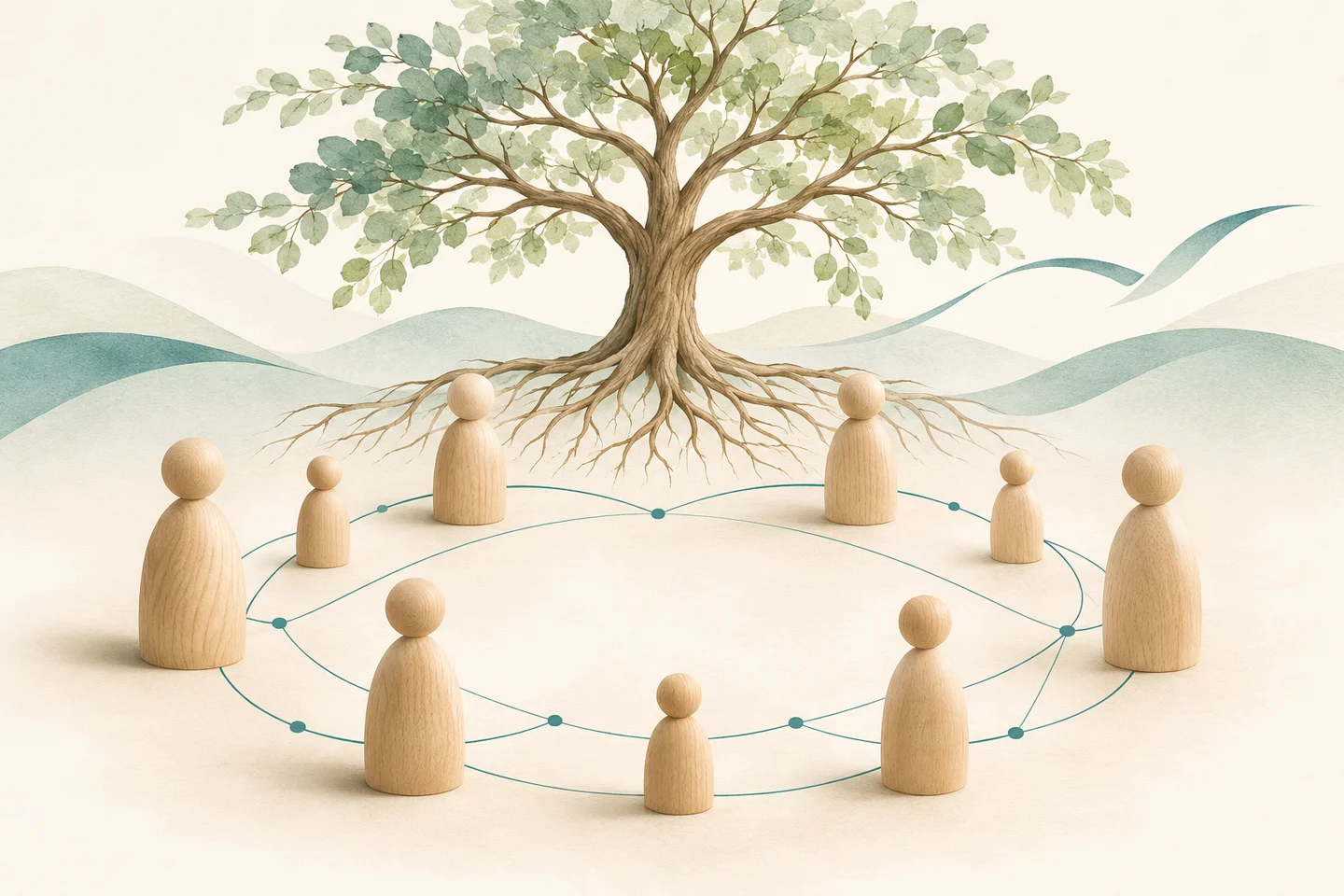
Explore family bonds, roles, rules, interaction history and the influence of family experience on a person’s life.
Understand family dysfunction, conflicts, crises, resistance and recurring interaction patterns.
Study circular interviewing, systemic hypotheses, genograms, family reconstruction and therapeutic interventions.
Analyse examples, complete practical tasks, work in groups and discuss professional questions.
Notice familiar roles, reactions and interaction patterns both with clients and in your own life.
“The training helps me strengthen my inner support while becoming more flexible.”
Programme participant
Apply through the AIST learning platform.
A family system is not a collection of separate individuals. It is an interconnected structure in which changes in one person affect the others. Alongside theory, you will apply systemic thinking to real situations, moving from principles to exploring family processes, assessment and therapeutic strategies.
Studying family systems also raises questions about your own experience. It can broaden your perspective and offer a fresh view of relationships with those close to you.
Theory, practice and supervision complement one another.
The learning can be emotionally engaging: some topics touch on personal experience, familiar ideas about family and your own ways of relating. The programme provides a supportive educational space to explore these complex issues.
You will explore the family as a whole system: its structure, characteristics and ways of functioning.
Family systems: features, characteristics, structure and types.
Principles of family therapy: circularity, hypotheses and neutrality.
The first meeting with a family: aims, stages and agreeing a contract.
Techniques for exploring a family system.
Exploring your own family system.
Outcome: understanding how family systems function and the main principles of working with them.
You will learn to explore family dynamics and develop systemic hypotheses.
Types of family dysfunction and family symptoms.
Developing, testing and refining systemic hypotheses.
Circular interviewing and types of circular questions.
The identified patient.
The symbolic meaning of a symptom.
Symptomatic behaviour as part of a circular pattern of interaction and a way to stabilise the family system.
Outcome: understanding family dysfunction and learning tools for systemic assessment.
You will explore therapeutic work with family symptoms and interactions.
Therapeutic interventions and strategies.
Working with the extended family.
Genograms and family reconstruction.
Aims, uses, techniques and rules for creating a genogram.
Possibilities and limitations of family reconstruction.
Outcome: tools for exploring family history and working with symptomatic behaviour.
You will learn how a systemic approach can help explore family conflicts and crises.
When the identified patient is a child.
Parent–child relationships.
Working with children and parents.
Family conflicts: dysfunctional and constructive ways of experiencing and resolving them.
Family resistance: how it appears and how to work with it.
Direct and paradoxical interventions and prescriptions.
Outcome: understanding family conflict and therapeutic approaches to crisis situations.
You will explore couple relationships and the main issues brought to couple therapy.
Working with couples.
Contemporary marriage: trends and characteristics.
Communication within the couple.
Techniques for working with couples.
Outcome: understanding couple dynamics and tools for addressing relationship concerns.
You will explore sexuality and the intimate dimension of partner relationships.
The sexual self-image.
Therapy for sexual disharmony within a couple.
Outcome: an introduction to sexuality and tools for working with sexual disharmony in couples.
You will consider infidelity in the context of the family system, as well as as an individual event.
What infidelity means.
Why people have affairs and what purpose this may serve.
What this symptom may express and its function within the family system.
How infidelity affects relationships.
Working with a couple or an individual client.
Maintaining therapeutic stability when a practitioner’s personal experience differs.
Outcome: a systemic understanding of infidelity and the particular challenges of this work.
Stages of work and techniques.
Children and parental divorce.
Fear, guilt and resentment in relationships: what a family psychologist needs to know.
The final stage of training.
To receive the diploma, you must:
Attend all training modules.
Complete 8 mandatory supervision sessions.
Provide the documents required to issue and register the qualification.
Supervision groups explore professional situations and questions, providing feedback and fresh perspectives on client work. Eight supervision sessions are required for the diploma. Supervision is paid separately from the training modules.
Ask about the programme Photo temporarily unavailable
Lead specialist · lead trainer
Clinical psychologist, family and group Gestalt therapist.
Married for over 25 years · 5 children · experience of running a business with her husband
Participants value her clear, structured explanations, practical examples, thoughtful answers and supportive learning atmosphere.
“Everything is clear and well structured, with many practical examples and a detailed answer to every question.”
Programme participant
“For me, psychology is a profession, a way of life and a philosophy. It is a path to understanding our nature, accepting our experience and gaining the freedom to be ourselves.”
In a way, psychology saved my life.
By conventional standards, I had everything for a happy life: a husband, children, a business and money. Yet finding meaning became harder, and happiness faded like mist in the race of daily events.
Migraines were unbearable. For ten years, three days every month, I suffered terrible headaches that even medication could not relieve.
Amid turbulent family events, my marriage cracked and divorce became a real possibility. Psychology helped it stay afloat, although the turbulence also began during that period.
But would my husband and I have met each other as we really are, without illusions, masks or expectations? Honestly asking, “Who are you?” Would we have stayed together and chosen each other? I am not sure.
In my view, people often enter this demanding profession through their own pain and experience. Otherwise it is difficult to be sincere with someone who is struggling and offer what they need. We cannot nourish others from emptiness.
I believe psychologists work not only through their approach, but also through an important instrument: themselves. Like a tuning fork, they need to attend first to their own tone.
I now work a great deal with couples. I am interested not only in contact between two people but between whole family systems. I help couples see what led to their difficulties and where knowledge and experience were missing in their families of origin. I have lived through more than one crisis in 25 years of marriage.
Everything I teach comes from extensive theoretical and practical exploration, both personal and with clients.
Family systems, addictions and sexology have all, in different ways, run through my own life.
These insights and experiences will form part of the family specialisation.
 Photo temporarily unavailable
Programme supervisor
Psychologist, Gestalt therapist, supervisor, author and entrepreneur in psychological services.
Founder of the Talk to me network for adults, Talk to me Kids and the Pogovorim.online video-consultation platform.
Supervision with Nigina offers another perspective on professional situations. Participants value the flexible format, attention to the group’s state and unexpected professional insights.
“I always leave with new insights and renewed energy.”
Programme participant
Her story shows how professional passion, grounded in practical experience, can bring remarkable change.
Nigina is a psychologist, Gestalt therapist and author, as well as a serial entrepreneur in psychology. She founded the Talk to me network for adults, the Talk to me Kids child psychology centre and the Pogovorim.online video-consultation platform.
Above all, she is deeply interested in relationship psychology. As entrepreneur, therapist, supervisor and educator, she remains curious about how personal, organisational and therapeutic relationships are formed.
Nigina says: “What could be more wonderful than seeing a couple who were overflowing with anger in a session kissing in the park afterwards? Or accompanying a couple through a difficult divorce and later meeting the new couples that emerged from relationships that ended well?”
For Nigina, working with couples and families is a continuing flow of emotion, a professional interest and a source of personal fulfilment.
On the family counselling course, she will be your supervisor, sharing practical experience and helping you move forward both in your own relationships and in your work with clients.
The family specialisation offers a new perspective on the many kinds of relationships in life.
Video to be added
Video to be added
Online learning via Zoom. Two-day modules on the published dates, from 10:00 to 18:00 with a break. All sessions follow Moscow time (UTC+3). The programme comprises 250 academic hours.
9 modules · March 2027 — January 2028
20 000 ₽ per module
9 modules. Total tuition — 180 000 ₽.
Payment by cards issued in Russia and other countries, as well as instalments, is available. Terms and payment dates are agreed with the Academy. Supervision groups are paid separately.
Submit an application on the AIST learning platform. Your payment will be linked to your application. If you are not ready to pay yet, you can leave an application so the Academy team can contact you.
AIST group therapy students on closeness, boundaries and family relationships.
I became braver, more confident, more attentive and more grounded. I learned to distinguish what suits me from what does not.
My starting point was total dependence 🤪 … dependence on my husband in every way, and I did not like it.
I became braver, more confident, more attentive and more grounded. I learned to distinguish what suits me from what does not.
I am completely satisfied with our studies! So much practice, so many examples and fascinating, powerful exercises!!! Thank you ☺️
I want to say a special word about AIST’s teaching team! They are truly outstanding professionals. Such sensitivity, attentiveness, depth and courage — I am absolutely delighted with my beloved teachers: Elena Naumova, Irina Gerasimova and Yulia Nechaeva!

Most importantly, I gained the opportunity to change my behaviour in healthier, more constructive ways. Through this training, I grew greatly as a person, began to understand my clients more deeply and could see the processes in their lives more broadly.
I really liked how the learning process was structured: we could experience being both group participants and group analysts 🔥, alongside lectures.
During the course, the pieces of the puzzle began to fit together in my mind. I started noticing processes not only in our training but in everyday life: how I behave in relationships, what frightens me, where I close myself off, and where I devalue things or cross boundaries.
Most importantly, I gained the opportunity to change my behaviour in healthier, more constructive ways. Through this training, I grew greatly as a person, began to understand my clients more deeply and could see the processes in their lives more broadly.
Group therapy and the training still have a tremendous therapeutic after-effect on me. The course provides skills and knowledge that can be applied immediately in professional practice.
I am incredibly grateful to all the teachers for the love, professionalism and care they invested in each of us, including me. Thanks to AIST, I felt as though wings had grown behind me!
Endless love and gratitude to my dear teachers — Elena, Yulia and Irina. Thank you from my heart for everything you give the world! It is a great joy to be part of AIST and feel your unseen support along my path 🙏🏼🤍

I was able to withstand and work through a difficult crisis with a business partner. In my personal relationships I also feel an inner maturity, and this is still unfolding. I became more aware of the feelings arising in me and began making room for them, rather than escaping feelings that are unfamiliar or uncomfortable.
I came to AIST because I know Elena well and trust her. Group dynamics themselves were a revelation. I understood and observed how people merge, then draw apart and come closer again at a new level of separateness.
Here I truly lived through that experience and saw that separating is completely normal: it is a phase of relationships. A major insight for me was that this applies not only to groups, but to everything — my business relationships and relationships with partners.
I was able to withstand and work through a difficult crisis with a business partner. In my personal relationships I also feel an inner maturity, and this is still unfolding. I became more aware of the feelings arising in me and began making room for them, rather than escaping feelings that are unfamiliar or uncomfortable.

I can now hold space for many more clients and much more money, and I managed to create a family with the same man, who has nevertheless changed. He values me as much as I have learned to value myself. I also managed to acknowledge my own professional strength and express it in my work for others.
I received what I came for.
I can now hold space for many more clients and much more money, and I managed to create a family with the same man, who has nevertheless changed. He values me as much as I have learned to value myself. I also managed to acknowledge my own professional strength and express it in my work for others.
I also want to say a few words about those who taught me to live and enjoy life — my teachers.
Elena Naumova, Yulia Nechaeva and Irina Gerasimova: in my practice, I now speak with their voices.
Voices filled with life and self-love. I love and value you immensely 💜
These accounts of group therapy training describe changes in participants’ relationships. Translated from Russian.
The programme provides for a professional retraining diploma on completion. To receive it, you must attend all training modules, complete 8 mandatory supervision sessions and provide the documents required to issue and register the diploma.
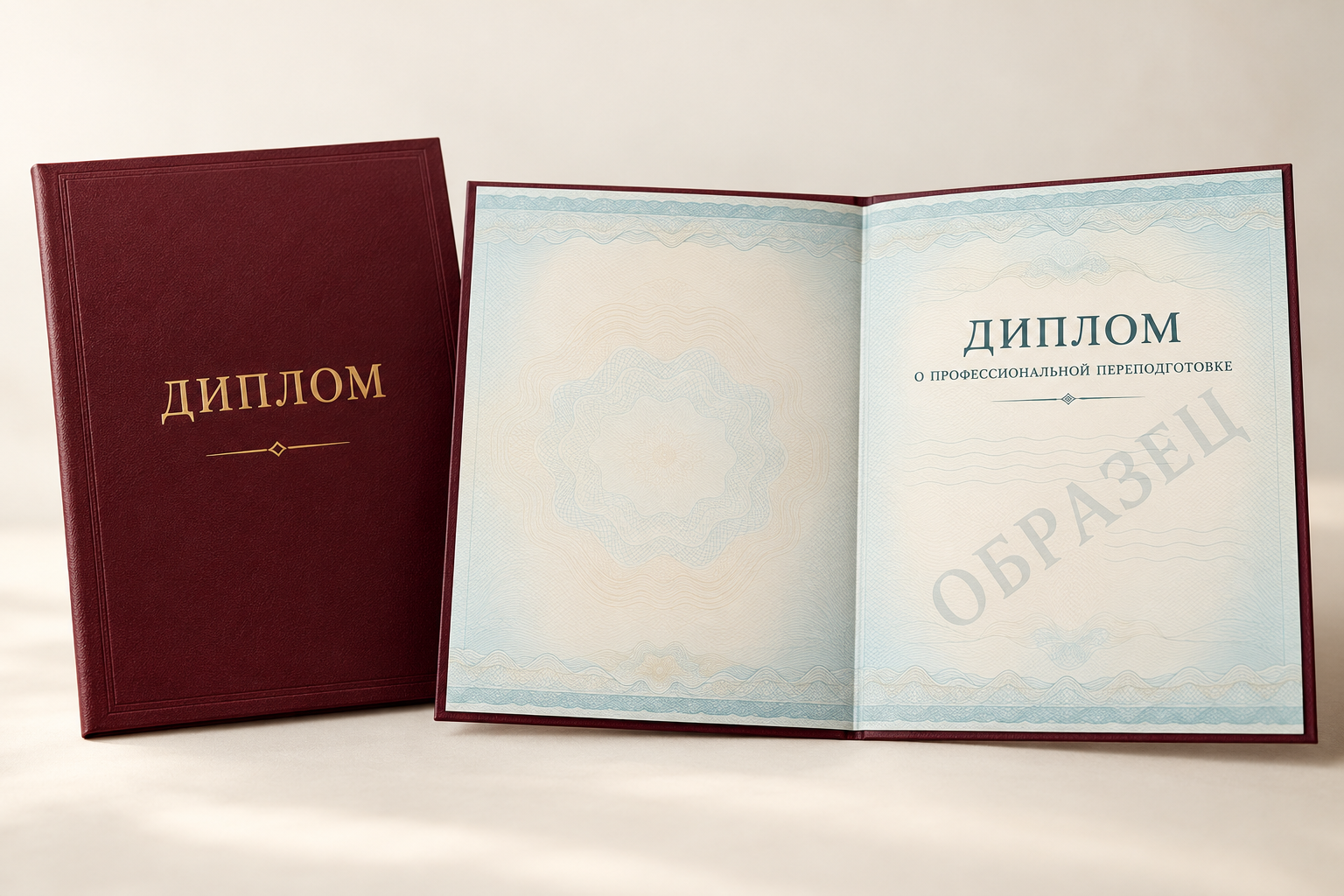
The programme is online in two-day modules. Published dates allow you to plan your participation.
Format and scheduleParticipants complete tasks, work in groups, apply theory to their own family systems, analyse cases and practise systemic tools.
Supervision groups with Nigina Sulaimani are available and paid separately. Eight supervision sessions are mandatory for the diploma.
Supervision with Nigina SulaimaniThe curriculum progresses from the family as a system and assessment to couples, conflicts and crises. Prior work with couples is not required.
Yes, you can study the theoretical modules and practical work for personal development. With higher education and completion of all programme requirements, you can obtain the professional retraining diploma.
Payment by cards issued in Russia and other countries is available. Confirm the terms and payment method with the Academy.
Recordings of completed modules are available to enrolled students on the learning platform for reviewing during training.
Access to lessons and recordingsEpisode 01 · Ekaterina Yakovleva
After eight years together, with children and an apparently settled life, why have conflicts increased and passion faded? We have grown apart and do not know how to reconnect. Should we divorce?
In this episode:
11 min 28 sec · In Russian
Download podcast · MP3Episode 02 · Ekaterina Yakovleva
When I enter a relationship, I choose a man who feels weaker than me. A couple of months later, this begins to bother and irritate me.
But when strong, accomplished men appear, I seem to close myself off and hide, thinking: “I am not on their level yet.”
How can I break this pattern? What should I pay attention to in myself?
In this episode:
5 min 58 sec · In Russian
Download podcast · MP3Episode 03 · Ekaterina Yakovleva
As soon as I tell my husband about my income, it decreases.
We earn about the same, but my husband does not notice how much I take care of. I want him to value my contribution.
How might I be contributing to my financial setbacks?
In this episode:
This is one example of the family dynamics that can arise within a couple.
7 min 54 sec · In Russian
Download podcast · MP3Episode 04 · Ekaterina Yakovleva
How can we bring our family closer? My husband, my son and I each have our own interests, and we spend little time together.
What could we do or suggest to one another to interact more?
Topics in this episode:
10 min 39 sec · In Russian
Download podcast · MP3Behind a conflict may be a relationship history; behind a symptom, a familiar interaction pattern; behind one person’s behaviour, processes in the whole family. A systemic approach reveals these connections and deepens your understanding of what happens between people. Develop your practice through systemic family psychotherapy.
Starts 11–12 March 2027